Local timeline
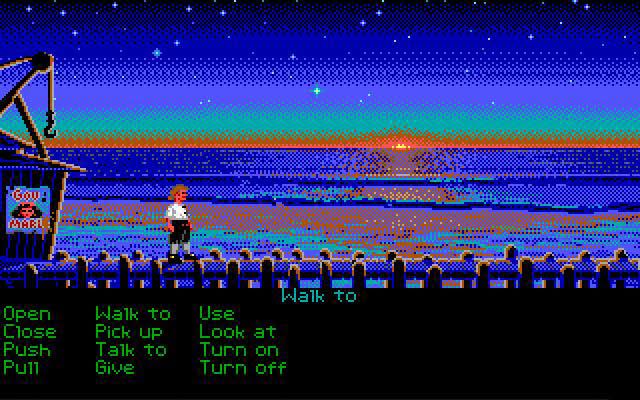
The EGA version of "The Secret of Monkey Island" showed this sunset in the first part, which then turned into night.
This was not replicated in later versions with higher resolution.
Sometimes it's true: fewer graphics meant more effort and imagination in communication and emotional impact.
Long, but I wanted to share some things.
@markhysted@federate.social @@stefano@rpi0w.stefanomarinelli.it true, Mastodon isn’t the best choice on such a device. snac is also a great solution on low power devices.
@stefano the first instance is up. Some more configuration fixes and I'll contact all the people who replied here, with instructions on how to join.
Calling all testers: littleFedi test instance coming soon
I will be launching a test instance of littleFedi soon.
If you would like a test account, reply to this post and I will reach out as soon as it is ready.
The goal is to test the platform with a larger group of users and gather initial feedback.
@pa@zusammenhalt.de there's a gateway (that can be self-hosted) so the mesh nodes can connect to that gateway and it will bridge the connections.
@EnigmaRotor@bsd.cafe illuminator! I like it. We may use it for one of the "official" lighthouses we're planning to publicly provide. Thanks for the idea!
@EnigmaRotor@bsd.cafe I'm trying to transform it into "faro", which is Italian, but I'm not the one who can decide here 😆
littleMesh addendum: readable handles and replaceable relays
Yesterday's post left one thing unsolved. Your littleMesh identity is your Ed25519 public key, which is great for security and terrible for a handle: nobody wants to type @alice@a1b2c3...52-characters....mesh.littlefedi.social, let alone read it out loud. And the lighthouse we mentioned, the relay that introduces you to the world, was baked into that identity too. Change relay, and you'd look like a different node.
We've been studying how to fix both, and we think we see a path.
The idea is a small signed directory sitting next to the mesh itself. You'd reserve a friendly alias, something like red-house.mesh.littlefedi.social, and your node would publish a signed record binding that alias to your node ID and to up to three lighthouses. Signed with the same mesh key you already have, no new identity, no new PKI. The record would carry a sequence number and an expiry, so nobody, not even the directory operator, could roll it back to an older version or serve a stale one past its time.
What we like about it is what it wouldn't change. Your handle would stay @alice@red-house.mesh.littlefedi.social, readable. Underneath, WebFinger would still resolve to your real actor ID, the one built from your node ID, exactly as today. And switching lighthouses, would just mean publishing an updated signed record. Same handle. Same actor ID. Nobody following you would notice anything happened.
The directory itself would stay deliberately weak in what it's trusted with. It couldn't produce a valid record for your node ID without your key, and every connection would still authenticate the node ID end to end, so even a malicious or compromised directory could deny service but never impersonate you.
We're building this over the next few days, opt-in, as an experiment. Once it's up, we want to see it survive a real follow exchange with stock Mastodon, snac and GoToSocial, and a lighthouse swap that doesn't touch the handle, before deciding whether it earns a permanent place in littleMesh or gets reworked. Worth trying, not yet worth trusting.
@luca@sironi.xyz It's planned, and should not be complex to add as it's the same concept as using the mesh with direct connections (no relays involved).
@sturai@masto.es It's a mixed approach: you can have your official domain (like example.com) and still federate via mesh. But you (currently) cannot change the domain name, so if your primary use is via lighthouse, you need to stick with the lighthouse's domain (for proper federation). This is because we need to keep compatible with the other ActivityPub implementations and the domain name needs to stay static.
There are some workarounds like you can have more lighthouses and they can have the same domain (we call it suffix).
True decentralisation via total domain name swapping could be feasible but it would only work between littleFedi instances, as Mastodon and other ActivityPub implementations wouldn't support it.
Anyway, we're still trying to find a reliable workaround for this. My dream would be total decentralisation and total migration from one relay to another, like Delta Chat.
We already tested something similar and it worked, but broke federation with other AP implementations.
@samuel@social.spejset.org Some ideas are similar, but Delta Chat relays have less constraints. The common idea is that the relay cannot read your contents, but littleMesh is (currently) more static than Delta Chat approach. This is because we need to keep compatible with the other ActivityPub implementation and the domain name needs to stay static.
@fullywoolly@mastodon.social @@stefano@rpi0w.stefanomarinelli.it Signal is great, but not decentralised.
@samuel@social.spejset.org unfortunately, the handle will be created and will be the same for the entire lifecycle of the instance. You can change the secondary relays, but not the first one.
But you can multiple relays serving the same handle, so you can have a failover setup.
@Linux@planet.moe littleMesh lets a littleFedi instance federate without a public IP address, a
DNS name, or an inbound port: from behind home NAT, behind CGNAT, on a laptop,
on a Pi plugged into a router nobody administers.
It is an additional transport, not a new protocol. ActivityPub, WebFinger, HTTP
Signatures, media fetches and the delivery queue all run over it unchanged.
Two kinds of machine take part:
- a node is an ordinary littleFedi instance that cannot accept incoming
connections; - a lighthouse is a small publicly reachable relay that introduces nodes to
each other and copies encrypted bytes between them. It stores no accounts,
reads no messages, and hosts no identities.
You need at least one lighthouse somewhere. It can be someone else's, a €3 VPS
of your own, or a machine you already run with a public address.
But we're also planning to run two "public" lighthouses and let the "littlefedi init" process to pre-configure them. Going online will really be a matter of seconds - without even needing a reverse proxy.
@fullywoolly@mastodon.social the idea came both from cloudflared and #DeltaChat relays. Dumb relays, that just interconnect people.
The only difference is that Delta Chat relays store messages, littleMesh doesn't